
602.483.6019
Privacy Without Darkness: Window Treatments That Preserve Natural Light
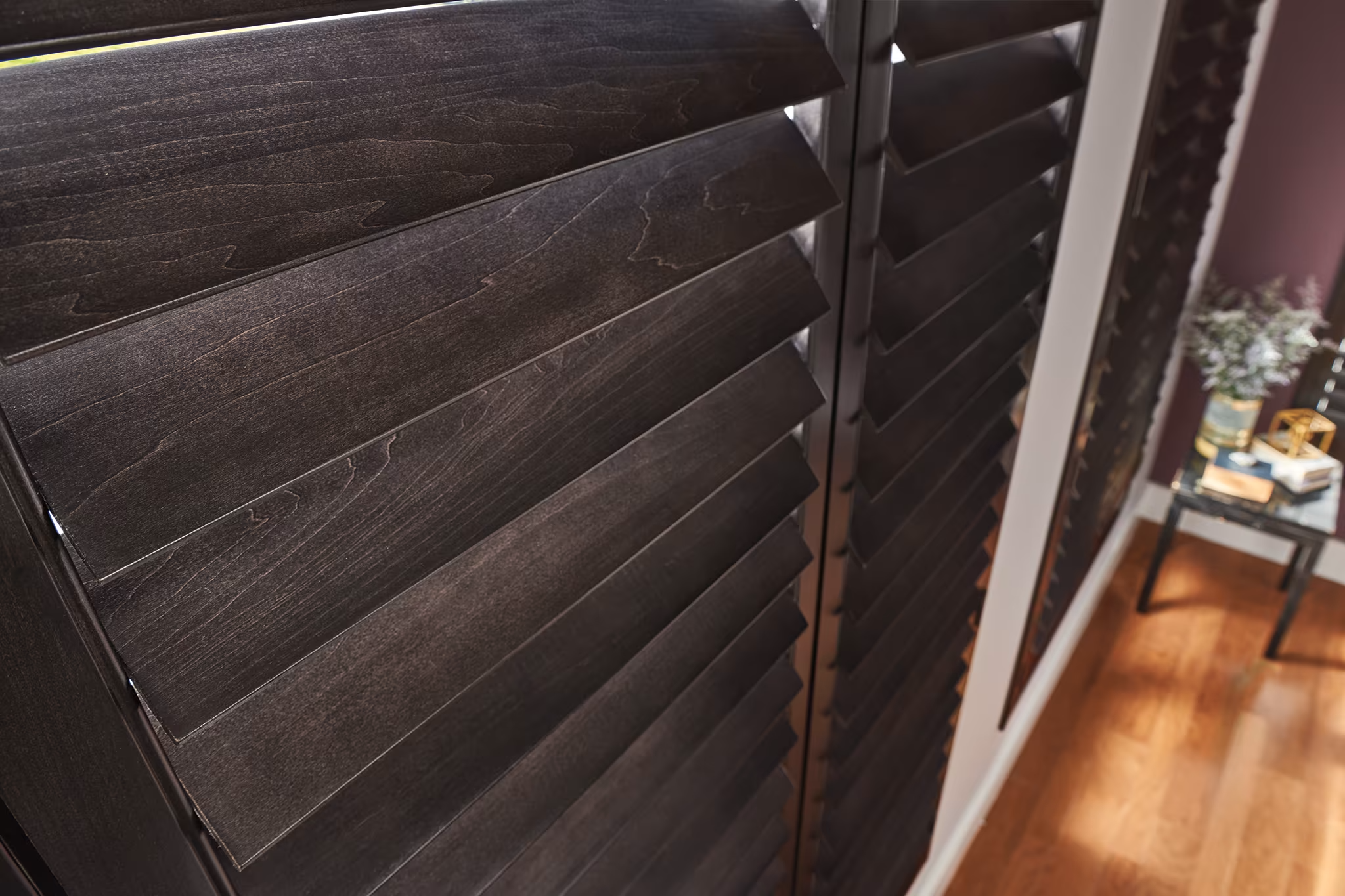
Privacy and natural light can feel like competing priorities. Leave the windows uncovered, and a room feels open and inviting, but potentially exposed. Close the blinds or shades, and you may gain privacy at the expense of the light that makes the space feel comfortable.
Fortunately, choosing privacy does not have to mean living in a darkened home. With the right window treatments, you can soften outside views, control visibility, and continue enjoying natural light throughout the day.
The key is understanding how privacy changes from room to room and from morning to night.
Privacy Is Not the Same in Every Space
Before selecting a window treatment, consider how the room is used and what can be seen through its windows.
A street-facing bathroom requires a different level of coverage than a second-story living room. A bedroom may need complete nighttime privacy, while a home office might only need protection from glare and passing distractions.
Ask a few practical questions:
- Can neighbors or pedestrians see directly into the room?
- Is the window exposed during the day, at night, or both?
- Does the room need privacy across the entire window?
- Is maintaining an outdoor view important?
- How much direct sunlight reaches the window?
These details help determine whether you need soft visual screening, adjustable privacy, or complete coverage.
Light-Filtering Shades Soften the View
Light-filtering roller shades are one of the simplest ways to create privacy while keeping a room bright. Their fabrics diffuse direct sunlight, reducing harshness without creating a fully darkened space.
During the day, a light-filtering shade can make it more difficult to see into a room while still allowing a soft glow to pass through. This makes it a natural choice for living rooms, dining areas, kitchens, and other shared spaces.
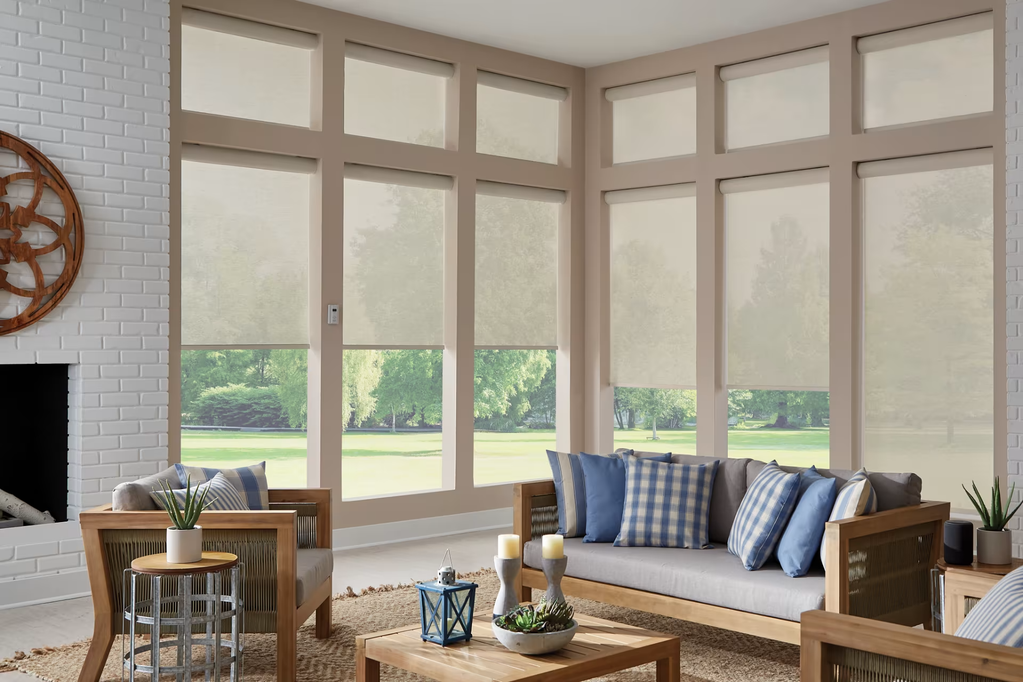
Fabric color and openness affect the result. Lighter materials often create an airy appearance, while more tightly woven fabrics provide greater visual coverage. A designer can help you compare samples at the actual window, where the direction and intensity of the light can be properly evaluated.
It is important to remember that light-filtering fabrics do not necessarily provide complete privacy after sunset. When interior lights are on, silhouettes and movement may be visible from outside. Rooms that require nighttime privacy may need a second layer or a more opaque treatment.
Sheer Shades Provide Adjustable Privacy
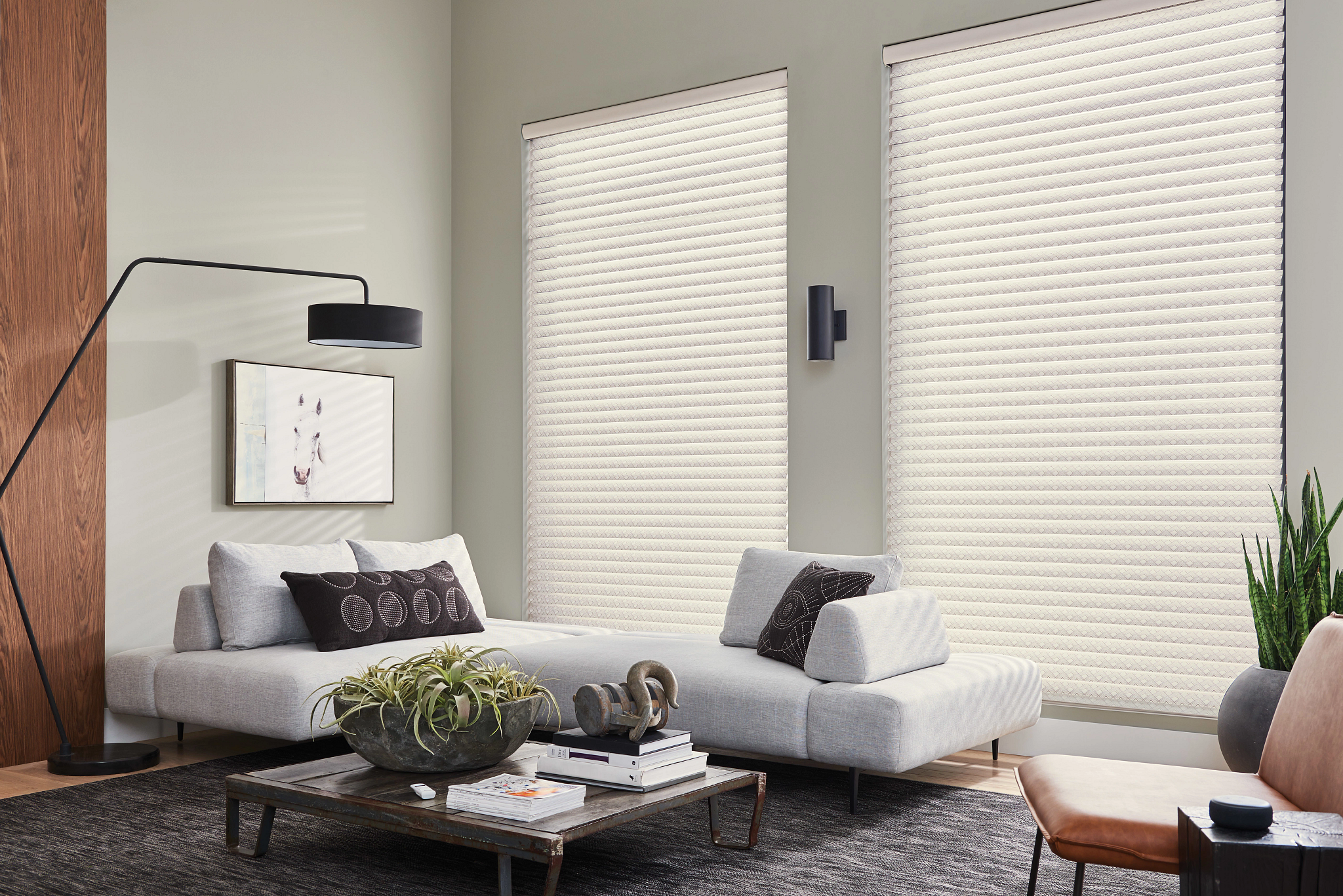
Sheer shades combine translucent fabric with adjustable vanes. When the vanes are open, daylight passes through the sheer material while outside views are softened. Tilting the vanes provides greater privacy and light control.
This flexibility makes sheer shades particularly useful in spaces where lighting conditions change throughout the day. A living room may benefit from diffused morning light, greater glare protection in the afternoon, and more complete coverage at night.
They also introduce a softer, more finished appearance than a basic blind while maintaining clean lines suitable for contemporary interiors.
Top-Down, Bottom-Up Shades Protect the Most Exposed Areas
Sometimes privacy is only needed across part of the window.
Top-down, bottom-up shades can be lowered from the top, raised from the bottom, or positioned between the two. This allows the lower portion of a window to remain covered while daylight enters from above.
The design works especially well for:
- Street-facing bedrooms
- Bathrooms with upper-level natural light
- Home offices near sidewalks
- Dining rooms facing neighboring homes
- Windows positioned close to outdoor gathering areas
Instead of blocking the entire opening, the shade can cover the exact sightline that creates the privacy concern.
Woven Shades Add Texture While Filtering Light
Woven wood and natural-texture shades can break up outside views while adding visual warmth to a room. Their fibers create depth, allowing daylight to interact with the material in a way that feels relaxed and organic.
Because weave density varies, some woven shades provide more privacy than others. Adding a privacy or room-darkening liner gives homeowners greater control over visibility and light levels.
This combination can be particularly effective when you want the character of a natural material without leaving a room overly exposed.
Layering Creates the Most Flexibility
For homeowners who want soft daylight during the day and complete privacy at night, layered window treatments offer the greatest versatility.
A light-filtering shade can manage daytime glare and soften outside visibility, while drapery panels provide fuller coverage when needed. The two layers also add dimension and make the window feel intentionally integrated into the room.
Layering can be tailored to the space. A formal living room might pair tailored drapery with a sheer shade, while a casual bedroom could combine a simple roller shade with softer fabric panels.
The goal is not to add layers unnecessarily. It is to give the room multiple ways to respond as light and privacy needs change.
Consider the View From Outside at Night
A window treatment may appear private from inside during the day but behave differently after dark. Once the sun goes down and interior lights come on, the brighter side of the glass shifts indoors.
Before choosing a material, think about both perspectives:
- How much can you see outside during daylight?
- What might someone see from outside after sunset?
- Will the room’s lights be positioned near the window?
- Does the space require complete nighttime privacy?
Looking at fabric samples against the window at different times of day can reveal far more than viewing them under showroom lighting.
Motorization Makes Privacy Easier to Maintain
Privacy works best when window treatments are easy to use. Shades that are difficult to reach or adjust may remain in the same position all day, even when the room’s needs change.
Motorized treatments can open and close according to a schedule, remote command, or smart-home routine. Street-facing shades might lower automatically around sunset, while upper sections remain open during daylight hours.
Automation is particularly helpful for tall windows, grouped windows, and rooms where several treatments need to move together. It can also make daily privacy feel effortless instead of becoming another household task.
Create Privacy That Still Feels Open
The best privacy solution is not always the most opaque covering. It is the treatment that responds to the room, the window’s surroundings, and the way your household lives throughout the day.
By combining thoughtful materials with adjustable designs, you can protect your home without sacrificing the natural light that gives it warmth and energy.
Latreia Home Solutions helps homeowners compare fabrics, understand visibility, and choose window treatments that balance privacy, light, and style. Schedule an in-home design consultation to see how different options will perform in your own space.
Editorial Writer - Victoria Yancer - Verum Digital Marketing
Transformations for Inspired Living
From elegant blinds to inspired interior spaces, and comprehensive home transformations, our expertise spans the spectrum of creating harmonious living environments. At Latreia, we redefine the essence of home through the convergence of window treatments, interior aesthetics, and expert craftsmanship. Explore the possibilities and elevate your living experience with Latreia Home Solutions today.