
602.483.6019
Window Treatments for Kitchens and Bathrooms: What Holds Up Best?
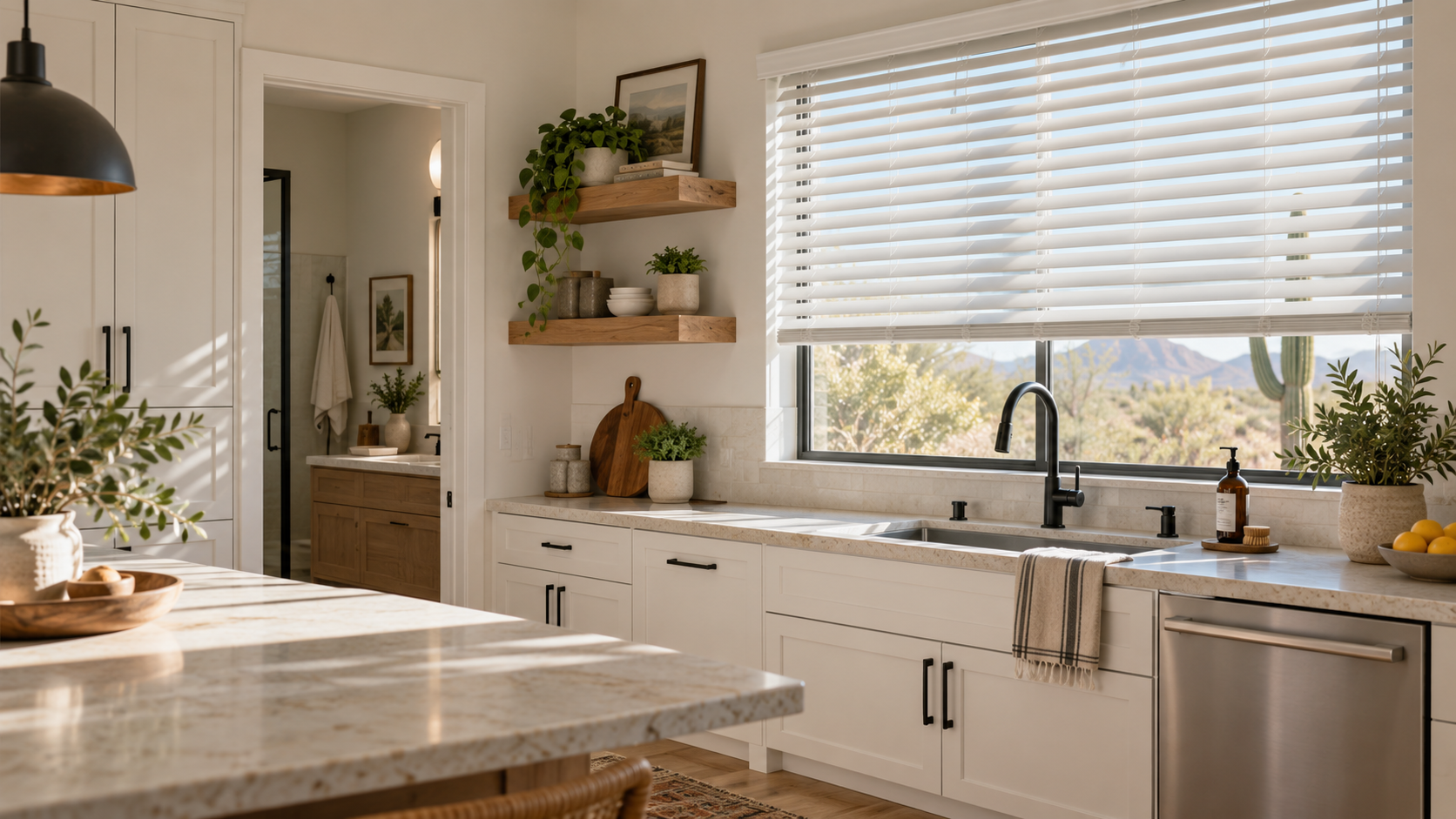
Kitchens and bathrooms ask more from window treatments than most rooms in the home.
In a living room or bedroom, the decision may be driven mainly by style, privacy, or light control. In kitchens and bathrooms, moisture, heat, cooking residue, splashes, cleaning needs, and limited wall space all play a role. The right treatment still needs to look beautiful, but it also needs to suit the way the room is used every day.
The best choice is rarely one-size-fits-all. A sunny kitchen window above the sink has different needs than a bathroom window facing a neighbor’s home. By considering the conditions around each window, homeowners can choose treatments that remain practical, polished, and easy to live with.
Start With How the Room Is Used
Before choosing a color or style, it helps to think through what happens around the window.
In a kitchen, you may be dealing with humidity from cooking, grease in the air, direct afternoon sun, and a window that is close to a sink or prep area. The treatment should be simple to operate and easy to keep clean.
In a bathroom, privacy is usually the first concern. But it is equally important to account for steam, changing humidity, and the need for natural light. A treatment that keeps the room comfortable and private without making it feel closed in can make a meaningful difference.
The right option should balance four things:
- Privacy
- Light control
- Durability
- Ease of cleaning
Faux Wood Blinds Are a Practical Choice for Humid Spaces
Faux wood blinds are a strong option for kitchens and bathrooms because they bring the classic look of wood while standing up well to humid conditions.
They are available in a range of white and wood-inspired finishes, making them easy to coordinate with cabinetry, tile, countertops, and trim. Their adjustable slats also give homeowners direct control over light and privacy. Tilt the slats to soften sunlight during the day, then close them more fully when privacy is needed.
Faux wood blinds are especially useful in bathrooms where a treatment may be exposed to regular steam. They are also an excellent choice for kitchen windows near sinks, where durability and wipe-clean maintenance are important.
For homeowners who want a tailored look without introducing delicate fabrics into a high-use room, faux wood can offer a practical and attractive solution.
Roller Shades Keep the Look Clean and Uncomplicated
Roller shades are a natural fit for kitchens and bathrooms with a more contemporary or minimal look.
Their streamlined design works well on windows above counters, sinks, tubs, and vanities because they do not add visual bulk. Depending on the fabric selected, they can filter daylight, reduce glare, increase privacy, or provide stronger coverage where needed.
In a kitchen, a light-filtering roller shade can soften harsh Arizona sunlight while still allowing the room to feel bright. In a bathroom, a more private fabric can help shield the space from outside views without requiring heavy drapery or complicated hardware.
The simplicity of a roller shade also makes it a smart option for smaller rooms. When raised, it sits neatly above the window and allows the room to feel open.
Cellular Shades Bring Privacy and Soft Light
Cellular shades can be a good choice when a kitchen or bathroom needs soft, even daylight and a more insulated feel at the window.
Their clean design works well in spaces where homeowners want privacy without the hard lines of slatted blinds. Many custom shade options are available in light-filtering and room-darkening styles, allowing you to select the right amount of coverage for the room.
Top-down, bottom-up functionality can be especially valuable in a bathroom. It allows the lower part of the window to remain covered for privacy while natural light enters from above. This can be useful in bathrooms facing a sidewalk, neighboring home, or outdoor living area.
A design consultation is helpful here because the same material can perform very differently depending on the size of the window, how much sunlight it receives, and where the room is located.
Sheer and Transitional Shades Offer Flexible Light Control
For kitchens where natural light is a major part of the room’s appeal, sheer shades and transitional shades can offer a more adjustable solution.
Sheer shades combine soft fabric with adjustable vanes, allowing homeowners to direct light while maintaining a bright, airy appearance. They can be a beautiful fit for a breakfast nook, a kitchen window with a garden view, or a space that needs glare control without feeling dark.
Transitional shades, also called zebra or banded shades, use alternating fabric bands to shift between filtered light and greater coverage. Their clean, modern look works well in updated kitchens and bathrooms where the design leans contemporary.
Both options are ideal for homeowners who want more flexibility than a single fixed fabric can provide.
Consider Shutters for a Built-In Look
Custom shutters can add structure and architectural character to a kitchen or bathroom. Their adjustable louvers make it easy to manage light and privacy, while their fitted appearance can make a window feel like an intentional part of the room’s design.
They are especially appealing in bathrooms with traditional, transitional, or coastal-inspired interiors. In kitchens, shutters can complement painted cabinetry, warm wood finishes, or classic tile selections.
Because each window and room has different exposure to moisture and sunlight, material selection should be discussed during the design process. A professional can help determine the right fit for the window, the room’s conditions, and the style of the home.
Skip Heavy Treatments Where Function Needs to Come First
Drapery can be beautiful in many parts of a home, but it is not always the most practical primary treatment for a kitchen or bathroom.
Fabric panels may not be ideal close to a sink, stove, tub, or shower, where they can be exposed to moisture, splashes, or cooking residue. In some rooms, drapery may still work as an accent layer away from the main work area. In others, a cleaner and more durable treatment will make more sense.
The key is not eliminating style. It is choosing materials that make everyday care easier.
Think About Privacy After Dark
Daytime privacy and nighttime privacy are not the same.
A light-filtering shade may soften views into a room during the day, but once interior lights are on after sunset, the room can become more visible from outside. This is particularly important for bathrooms, but it can matter in kitchens that face a neighboring property or outdoor entertaining space.
If complete nighttime privacy is important, make sure the selected treatment is designed to provide enough coverage. In some rooms, that may mean choosing a more opaque fabric. In others, it may mean pairing a functional shade with an additional layer.
Looking at samples in the actual room can help homeowners understand how a treatment will perform throughout the day.
Choose a Treatment That Works With the Rest of the Home
Kitchens and bathrooms do not need to match every other room exactly. In fact, they often need a more performance-driven solution than the living room or primary bedroom.
They should, however, feel connected to the larger design of the home. A shade color can relate to the cabinet finish. A blind can echo the trim color. A shutter can bring structure to a room that already uses classic architectural details.
The goal is a home that feels cohesive while allowing each room to function as it needs to.
Find the Right Fit for Everyday Living
The best window treatment for a kitchen or bathroom is one that suits the room long after installation day. It should be easy to use, easy to maintain, and thoughtfully chosen around light, privacy, and the conditions of the space.
Latreia Home Solutions offers a range of window treatments to help homeowners find the right balance of beauty and practicality. Schedule a complimentary in-home consultation to explore options in the rooms where they will be used.
Editorial Writer - Victoria Yancer - Verum Digital Marketing
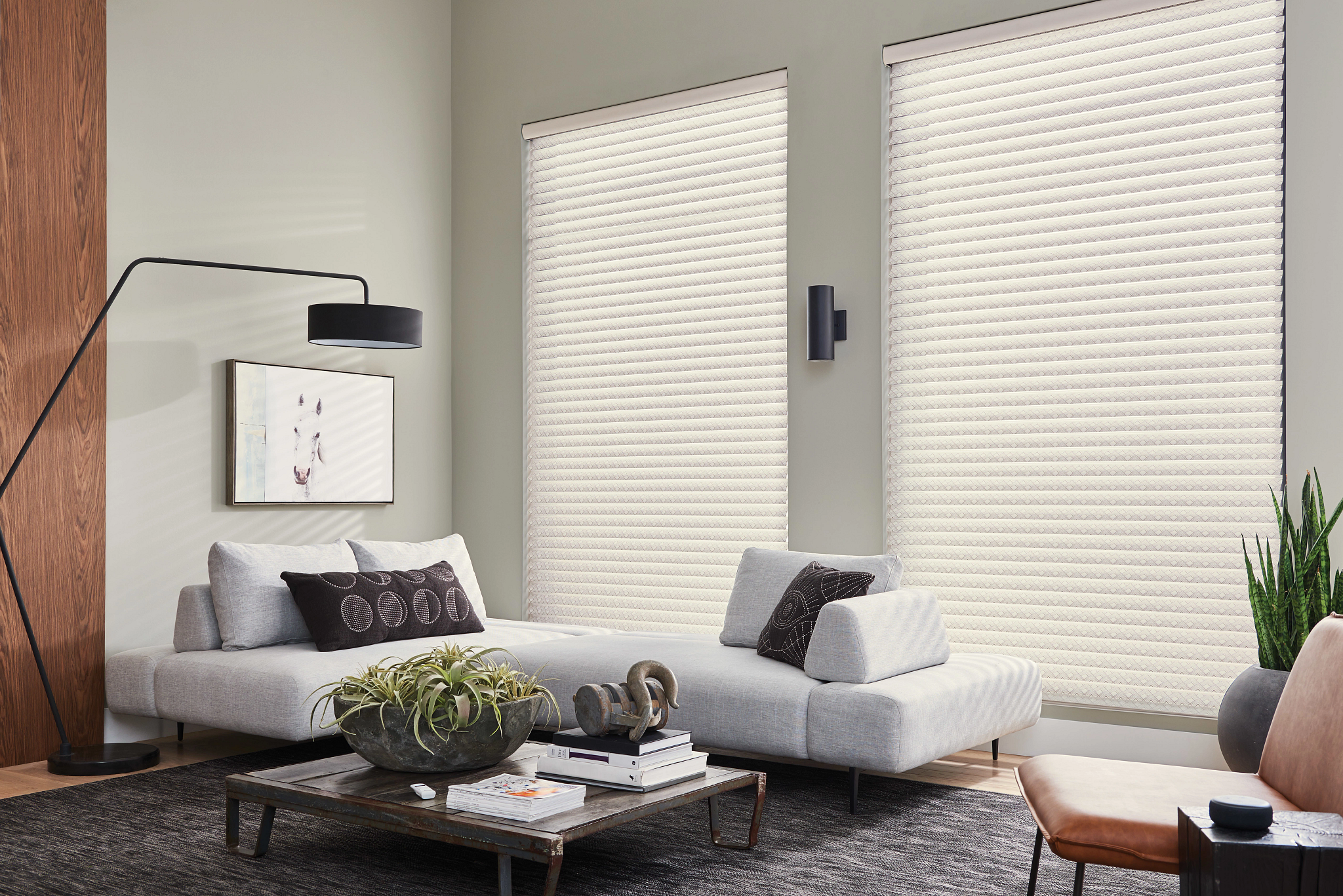
Transformations for Inspired Living
From elegant blinds to inspired interior spaces, and comprehensive home transformations, our expertise spans the spectrum of creating harmonious living environments. At Latreia, we redefine the essence of home through the convergence of window treatments, interior aesthetics, and expert craftsmanship. Explore the possibilities and elevate your living experience with Latreia Home Solutions today.