
602.483.6019
Window Treatments for Bay, Bow, and Corner Windows
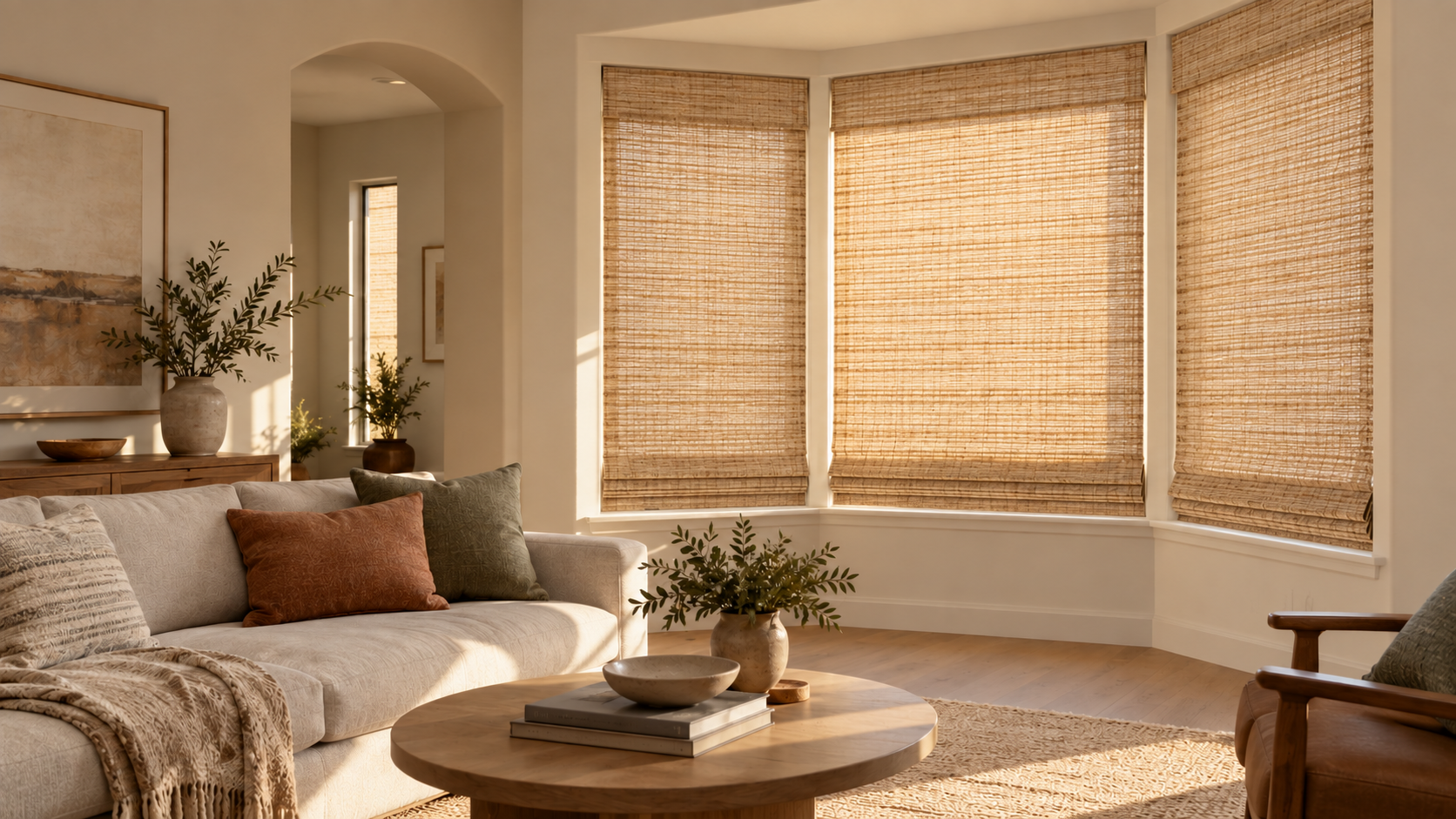
Bay, bow, and corner windows bring something special to a home.
They create a wider view, invite in more natural light, and often make a room feel larger and more connected to its surroundings. But their shape can also make window treatment decisions more complicated. Multiple panels, changing angles, deep ledges, and adjacent walls all need to work together.
The right window treatment should celebrate the architecture of these windows while giving homeowners the privacy, light control, and comfort they need. The key is to plan the entire window arrangement as one design rather than treating each section as an unrelated window.
Understand the Window’s Shape Before Choosing a Treatment
Bay, bow, and corner windows may all create a panoramic effect, but they are built differently.
A bay window typically projects outward from the home with three sections: a larger center window and two angled side windows. A bow window is usually made up of several connected panels that create a gentle curve. Corner windows meet at the intersection of two walls and can create a dramatic, wraparound view.
Before selecting a treatment, consider:
- How many individual panes or sections are involved
- Whether the windows meet at sharp angles or a gradual curve
- How much wall space is available around the windows
- Whether there is a built-in seat, furniture, or a walkway below
- Where the strongest sunlight enters
- How much privacy is needed during the day and after dark
These details affect not only what will look best, but also how smoothly each treatment will operate.
Treat the Windows as One Composition
A common mistake is choosing a different solution for each section of a bay or corner window. Even when the individual windows are similar in size, treating them separately can make the arrangement feel busy or disconnected.
Instead, begin with a unified plan.
The treatments do not need to be identical in every detail, but they should share a consistent fabric, color, mounting height, or style. This creates visual rhythm across the full window arrangement and allows the architecture to remain the focal point.
For example, matching roller shades across each section can create a clean, uninterrupted appearance. Coordinated Roman shades can bring softness while still respecting the structure of the window. Shutters can create a more tailored, built-in feel.
The best option depends on the style of the home and the way the room is used.
Roller Shades Keep the Focus on the View
Roller shades are often a strong choice for bay, bow, and corner windows because of their simple profile.
When raised, they sit compactly above the glass and allow the view to remain open. When lowered, they can reduce glare and soften sunlight without adding a lot of visual weight to the room.
This can be especially useful for homes with a mountain, golf-course, backyard, or pool view. The treatment should help manage Arizona sunlight while still allowing the scenery to feel like part of the interior.
For a more cohesive look, each shade can be selected in the same fabric and mounted at a consistent height. The result is clean, quiet, and adaptable to both traditional and modern interiors.
Roman Shades Add Softness and Dimension
Roman shades can be an excellent option when the goal is to soften a bay or bow window without relying on full drapery panels.
Because they are available in a range of fabrics, textures, and prints, Roman shades can introduce color and personality into a window arrangement while still providing functional coverage. Their stacked appearance also adds dimension when raised.
They work well in dining rooms, breakfast nooks, bedrooms, and sitting areas where the window is an important feature of the room.
In a bay window, coordinated Roman shades can give each section its own finished treatment while still creating one larger visual statement. In a bow window, the repeated fabric can complement the gentle curve of the glass.
Explore Latreia’s shade collection to compare Roman, cellular, sheer, transitional, and woven-wood options.
Woven Wood Shades Bring Warmth to Architectural Windows
Woven wood shades are a beautiful choice for homeowners who want natural texture and a more organic feel.
Made from materials such as bamboo, wood, jutes, grasses, and blended yarns, woven shades can introduce warmth without making the room feel overly formal. They work especially well in Arizona homes that use natural finishes, warm neutrals, stone, wood, or relaxed modern styling.
Woven shades can also be paired with a privacy liner when stronger coverage is needed. This allows homeowners to enjoy the texture of the material while adapting the treatment to the room’s light and privacy needs.
For a bay or bow window, matching woven shades can create a soft, cohesive frame around the full arrangement.
Shutters Create a Tailored, Built-In Appearance
For homeowners who prefer architectural structure, custom shutters can create a polished and enduring look.
Their adjustable louvers allow for flexible light control, which is especially helpful on windows that receive strong sunlight at different times of day. Open the louvers to bring in daylight, tilt them to reduce glare, or close them more fully for privacy.
Shutters can work particularly well in bay windows where the individual sections have a defined shape. They can emphasize the geometry of the window while keeping the overall arrangement clean and intentional.
They are also a good option when homeowners want a treatment that feels permanent and integrated with the home’s trim and millwork.
Add Drapery Only Where It Has Room to Work
Custom drapery can add softness, scale, and a more layered look around a bay, bow, or corner window. But placement matters.
If the wall has enough room on either side of the window arrangement, panels can be mounted outside the glass to frame the opening without blocking too much of the view. This approach can make a window feel larger and draw the eye upward, especially when the hardware is installed higher than the top of the frame.
In other rooms, there may not be enough wall space for full panels to stack comfortably. In those cases, a shade or shutter may be the more practical primary treatment.
The goal is to use drapery when it enhances the architecture, not when it competes with it.
Plan for Light From Multiple Directions
One of the benefits of a bay, bow, or corner window is that it can bring in light from more than one direction. It can also make glare more difficult to manage.
The center section may receive strong afternoon sun while the side sections remain bright but less intense. A corner window may bring in morning light on one side and late-day light on the other.
This is where individual control can make a difference. Separate treatments allow homeowners to adjust the areas that need coverage without closing the entire window arrangement. Motorized window treatments can make this even easier, particularly for larger windows or windows located behind furniture.
A design consultation can help identify how the light moves through the room and which treatments will give you the flexibility you need.
Do Not Overlook Privacy at Night
Wide windows often create beautiful daytime views, but they can become more exposed after sunset.
If the room faces neighbors, a street, or an outdoor gathering area, think about how the treatment will perform once interior lights are on. A treatment that filters sunlight during the day may not provide the same privacy at night.
Choosing the right fabric, adding a privacy liner, or layering with drapery can help create a more comfortable and private space after dark.
Custom Planning Makes the Difference
Bay, bow, and corner windows are rarely a place for a quick, one-size-fits-all decision. Their proportions, angles, light exposure, and relationship to the room all deserve attention.
Latreia Home Solutions begins with an in-home consultation, where you can explore fabrics, finishes, and treatment styles in the space itself. From precise measurements to professional installation, the process is designed to help your window treatments look intentional, operate smoothly, and feel right for the way you live.
Schedule a complimentary in-home consultation to find the right window treatment solution for your bay, bow, or corner windows.
Editorial Writer - Victoria Yancer - Verum Digital Marketing
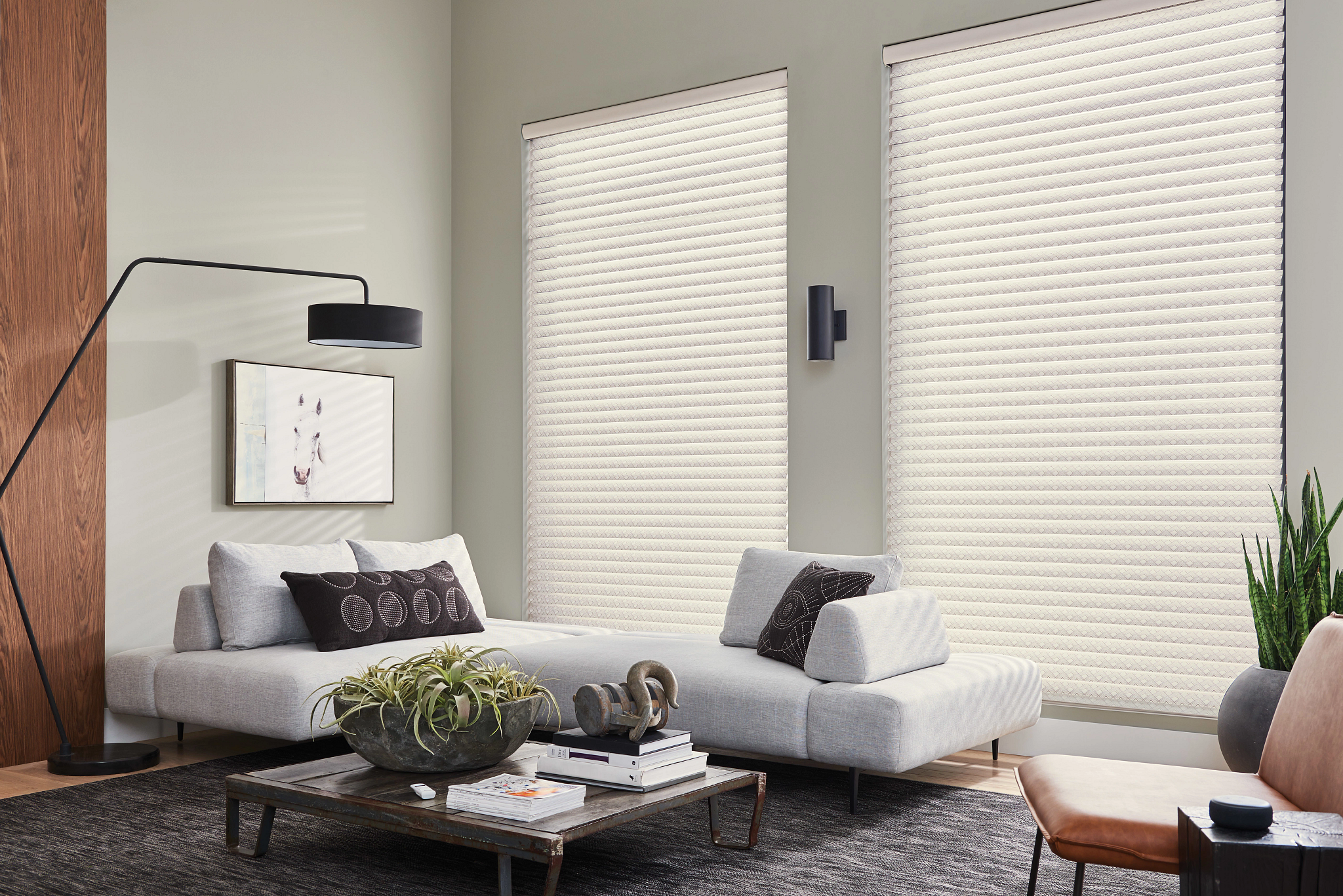
Transformations for Inspired Living
From elegant blinds to inspired interior spaces, and comprehensive home transformations, our expertise spans the spectrum of creating harmonious living environments. At Latreia, we redefine the essence of home through the convergence of window treatments, interior aesthetics, and expert craftsmanship. Explore the possibilities and elevate your living experience with Latreia Home Solutions today.