
602.483.6019
Window Treatments for Work-From-Home Spaces
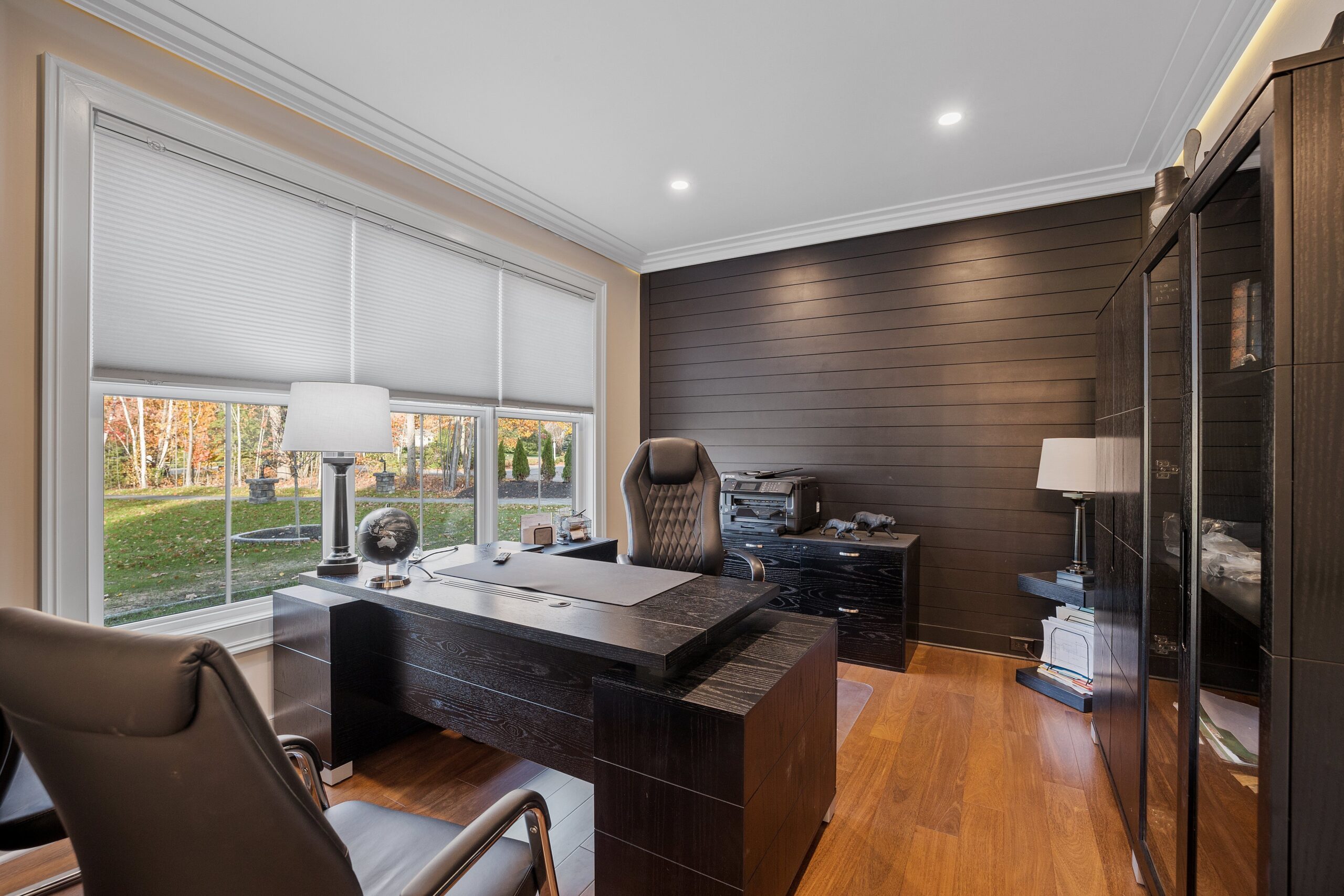
A work-from-home space has to do more than look good. It needs to help you focus, feel comfortable, take calls, manage natural light, and move through the day without fighting glare, heat, or a lack of privacy.
That is why window treatments matter so much in a home office, flex room, loft, bedroom workspace, or built-in desk area. The wrong window covering can make the room feel too bright, too dark, too exposed, or unfinished. The right one can make the space feel calmer, more polished, and easier to work in.
For many homeowners, the goal is not to block all natural light. It is to control it better.
Why Work-From-Home Spaces Need Different Window Treatments
A regular room and a work-from-home space do not always need the same window treatment.
In a bedroom, the priority may be privacy and darkness. In a living room, it may be softness, style, or light filtering. In a home office, the needs are more specific. You may need to reduce screen glare, keep the room bright enough to feel energized, create privacy during calls, and make the space look clean on camera.
That balance is what makes custom window treatments so helpful. Instead of choosing something that only solves one issue, the right design can support the way the room is actually used throughout the day.
Start With the Main Problem in the Room
Before choosing a style, it helps to identify what is making the space harder to work in.
Some work-from-home spaces get harsh light across a computer screen. Others feel too exposed from the street or neighboring homes. Some rooms look fine in the morning but become uncomfortable in the afternoon. Others feel dark and heavy because the window coverings block too much light.
The best window treatment depends on what the room needs most:
- Less glare on screens
- More privacy during calls
- Better control over bright natural light
- A softer background for video meetings
- Less heat near the desk
- A more polished, finished look
- Easier daily operation
Once the main issue is clear, it becomes much easier to choose between shades, blinds, shutters, drapery, or motorized options.
Reducing Screen Glare Without Making the Room Too Dark
Glare is one of the biggest frustrations in a work-from-home space. Even a beautiful room can become hard to use when sunlight hits the screen at the wrong angle.
This is where light-filtering shades can work well. They soften daylight without fully closing off the room. Instead of creating a dark workspace, they help diffuse the light so the room feels more balanced.
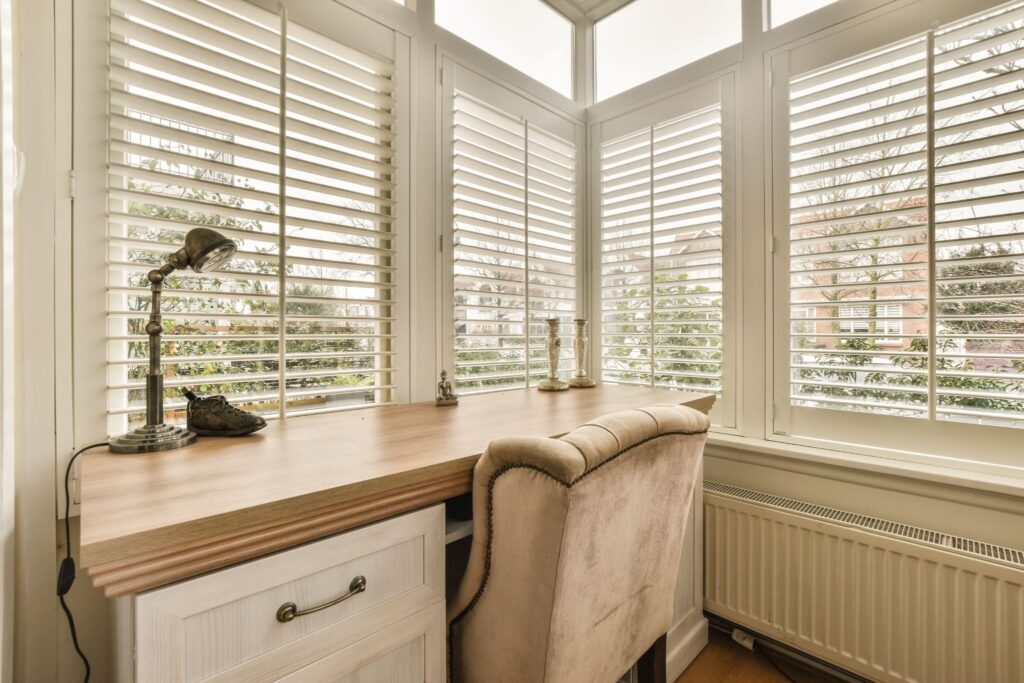
Roller shades are a strong option for home offices because they have a clean look, simple operation, and a wide range of fabric choices. Depending on the fabric, they can help manage glare while still allowing natural light into the space.
For rooms that need stronger light control, a more opaque shade may be a better fit. This can be especially useful if the desk faces the window or if the sun hits the workspace during peak work hours.
Creating Privacy for Calls and Focus Time
Privacy matters in a work-from-home space, especially if the room faces the street, a neighbor’s home, a shared courtyard, or a backyard where people are often passing by.
The right window treatment can make the room feel more protected without making it feel closed in. Shades can offer soft privacy and light control, while blinds give you more flexibility to tilt the slats and adjust visibility throughout the day.
This is helpful for workspaces where privacy needs change. You may want more natural light during quiet work hours, then more coverage during a video call or meeting.
Choosing a Window Treatment That Looks Good on Camera
Video calls have made home office design more important. Even if the rest of the room is simple, the window area can affect how polished the space feels.
A window behind or beside the desk can change the lighting on camera. Too much backlight can make the person on screen appear shadowed. Harsh light can make the room look washed out. Busy or mismatched window coverings can make the background feel distracting.
A clean shade, tailored shutter, or soft drapery panel can help the room feel more intentional. The goal is not to overdesign the space. It is to create a background that feels calm, finished, and easy to work in.
Roller Shades for a Clean, Simple Workspace
Roller shades are one of the easiest window treatments to use in a work-from-home space because they are simple, streamlined, and versatile.
They work especially well for homeowners who want the room to feel clean and uncluttered. The shade can sit neatly inside or above the window, and the fabric can be selected based on how much light, privacy, or glare control the room needs.
For a modern home office, roller shades can provide a finished look without adding visual weight. They are also a strong option for shared spaces, like a guest room that also functions as an office.
Blinds and Shutters for Adjustable Light Control
Some work-from-home spaces need more control throughout the day. In those rooms, blinds or shutters can be a better fit.
Blinds allow you to adjust the angle of the slats, which makes it easier to redirect light instead of blocking it completely. This can help when the sun is bright but you still want the room to feel open.
Shutters offer a more structured, built-in look. They can work well in home offices where the homeowner wants privacy, durability, and a more architectural finish. The louvers can be adjusted throughout the day, giving the room flexibility without relying only on open-or-closed coverage.
Both options can be useful when the workspace needs privacy and light control at the same time.
Drapery for a Softer, More Finished Office
Not every work-from-home space needs a minimal look. Some rooms feel better with softness, texture, and a more designed finish.
Drapery can help a home office feel warmer and more complete, especially if the room has tall windows, hard surfaces, or a desk setup that feels too plain. Drapery can also layer well with shades or blinds when the room needs both function and style.
For example, a shade can handle everyday light control while drapery adds softness and depth around the window. This layered approach can make the office feel less temporary and more connected to the rest of the home.
Motorized Window Treatments for a Smoother Workday
Motorized window treatments can be especially helpful in work-from-home spaces because light changes throughout the day.
Instead of getting up to adjust shades before a call, during a meeting, or when the sun shifts, motorization allows you to control the window coverings more easily. Depending on the setup, shades can be adjusted by remote, app, schedule, or smart home integration.
Our motorization options can make the room feel more seamless, especially for larger windows, hard-to-reach windows, or spaces where the light needs to change during work hours.
Motorization is not only about convenience. It can also help the window treatments become part of the daily rhythm of the room.
What If the Office Has Large Windows or Patio Doors?
Some work-from-home spaces are connected to larger windows, glass doors, or backyard-facing rooms. These areas can be beautiful, but they can also be harder to control.
Large glass areas may bring in more light than the room can comfortably handle. They can also create privacy concerns or temperature changes throughout the day.
For these spaces, the right solution may involve wider shades, vertical-style coverage, drapery panels, shutters, or a layered window treatment plan. If the sun is hitting the room from the outside before it even reaches the glass, outdoor shade options may also be worth considering.
The goal is to control the light before it starts working against the room.
How to Choose the Right Window Treatments for a Work-From-Home Space
The right window treatment depends on the room, the window placement, and the way the space is used.
A private office used every day may need a more permanent, polished solution. A guest room that doubles as an office may need a balance of workday light control and bedroom privacy. A desk in a loft or open living area may need something simple that blends with the rest of the home.
Before choosing, consider:
- Where the desk is placed
- What time of day the room gets the most light
- Whether the window faces the street or a neighbor
- How often the room is used for video calls
- Whether the space needs privacy, glare control, or both
- Whether the window treatment should feel minimal, soft, or built-in
- Whether motorization would make daily use easier
A good work-from-home space should feel comfortable and functional without feeling overdone.
Get Help Choosing Work-From-Home Window Treatments
Window treatments can make a work-from-home space feel more comfortable, private, and complete. The right option can reduce glare, soften the room, improve privacy, and make the space easier to use throughout the day.
Because every workspace is different, the best solution starts with the room itself. Window size, sun exposure, desk placement, privacy needs, and style preferences all affect what will work best.
If your home office, flex room, or work-from-home space needs better light control, we can help you compare materials, styles, and motorized options that fit the way you use the room.
Get an Estimate for custom window treatments designed around your workspace.
Frequently Asked Questions About Work-From-Home Window Treatments
Editorial Writer - Victoria Yancer - Verum Digital Marketing
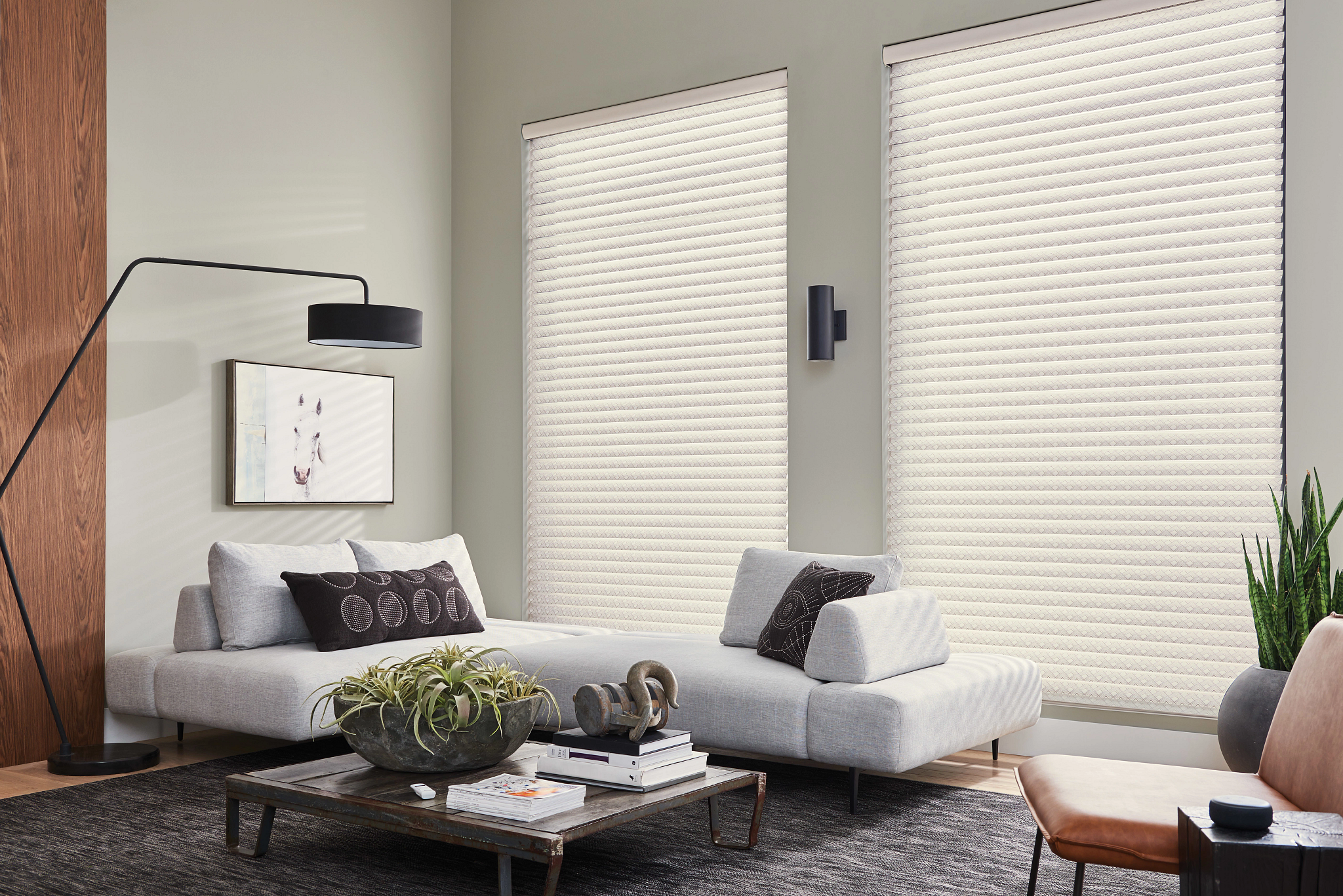
Transformations for Inspired Living
From elegant blinds to inspired interior spaces, and comprehensive home transformations, our expertise spans the spectrum of creating harmonious living environments. At Latreia, we redefine the essence of home through the convergence of window treatments, interior aesthetics, and expert craftsmanship. Explore the possibilities and elevate your living experience with Latreia Home Solutions today.